Discover Australia

Leaving Fraser Island heading south

Fuel is expensive on Fraser island, as much as $2.15 a litre (a good 90 cents cheaper than back on the mainland). We had come well prepared with an additional 60l in Gerry cans, but on the day we left I was doing calculations to see whether we would need to buy some diesel to get off the island safely. It was 65km from the camp back to Hook point where the ferry left from and then almost 10km back from Inskip Point to Rainbow Beach where there was a petrol station. Taking off our confidence was high as the sand below the high water mark was not at all soft, but with a tide coming in fast the last few kilometres were challenging. We had no fuel for backtracking and chose to continue along the beach rather than take the soft inland track to the ferry. The last few kilometres are particularly soft and challenging and fuel economy plummeted, then my heart sank when we saw that the tide had reached the dead trees that litter the beach near the point. With a quick weave between trees above high water mark and a last sprint across the sand as the waves receded we made it. We didn’t want to become another Fraser Island automobile tragedy today. No cars came that way behind us on that tide.

A full capacity 80l of diesel was required at Rainbow Beach to refuel, proving our calculations may have been a little too close for comfort on this occasion.

Next stop Mitsubishi in Gympie to find out why the transmission warning light had been flashing for a week. Pacific Mitsubishi had an engineer, Tom, who generously came out of the workshop to look at the car, plugged in the diagnostic computer and told us we were stuck in 2WD due to a switch failure. Had we known this on Fraser Island we might not have been so adventurous with our exploring, but it proved the Pajero is a truly a workhorse that could conquer the sand in 2WD, never even coming close to faltering. Tom gave us top customer service – thanks very much Tom.

We pressed on to Tewantin for a couple more days with my cousin, where we walked out to Hells Gate in the national park and Amanda got to shop on Hastings street

Then it was on to the Gold Coast to catch up with a long-time friend of Amanda. Charmaine and John have a resort style pool that kept the kids busy for several days and a sizeable piece of land that Sydneysiders only dream of. The kids even got to ride John’s mower (some work had to be done to pay for our stay!).

We caught up with Amanda’s relatives too who live in the area, those we never see as often as we should, and had some quality family time with them.


Categories: Adventure, australia, Big Lap, Discover Australia, Explore Australia, Journey Narrative, Kids Travel, Mitsubishi, Offroad, Queensland, Road trip, Travel, Travel Adventure | Tags: , , , | Leave a comment

Fraser Island (Part 2)

The following day saw us heading north to Sandy Cape, up past Indian Head, Waddy Point, through the cute settlement of Orchid Beach, before heading up the beach again. With the tide being quite high on the way up we had to briefly leave the beach at Ngkala Rocks taking a bypass track that squeezed us through the rocks. We spotted two more dingos on this trip and at Sandy Cape the road to the lighthouse was impassable due to the tide, so we took to foot to walk over the dunes to the Carree campsite. The tall sand dunes plummet to the seashore and the kids ran up and down in the hot sunshine whilst we watched. The lighthouse poked out from the trees several kilometers to the west of us but too far to walk in the heat.

On the return trip we visited the Champagne Pools, somewhat disappointing due to the fact that each pool had fifty backpackers wallowing in it, some of them stripping off and crushing snails to feed the fish, despite the “no collecting” signs.

When challenged one said he was with an Aboriginal who said it was ok to do so. Whilst indigenous people do have privileges to collect within National Parks, tourists don’t and when others started copying the marine life will soon be stripped and spoilt for the future. I found it surprising that the indigenous guide had allowed this, as most aboriginal people we have met consider themselves to be guardians of the land they occupy. In this case perhaps the lure of the dollar was more important than preservation of the environment.

We walked to the tips of Waddy Point and Indian head to look for sharks, turtles and more but returned disappointed.

On the return trip we headed east at Orchid Beach to visit Wathumba, a large estuarine area, with a wooded coastline and mangroves growing in the sand. This beautiful spot is notorious for sandflies but we didn’t witness many at all.

Another day, another excursion and we headed south to take in the Central Lakes drive. Out timing of the tide wasn’t good and when we arrived at Eli creek some thirty cars on both sides of the creek were awaiting the tide to abate. Some of the Tag-Along tours had fixed itineraries though and were not prepared to wait. The 4WD vehicles driven primarily by inexperienced backpackers nervously entered the water, sometimes to their leaders horror even taking a precarious passage over rocks. Whilst the water wasn’t too deep I was prepared to wait a bit longer rather than taking a brine rinse under the bonnet.

One vehicle stalled on the exit and couldn’t be restarted by the driver. Without a snorkel it looked like this could be the end of their day but the leader emerged from the back of his vehicle with a can of CYC spray and with a prolonged spray under the bonnet life was restored in the engine and off they drove.

As we crossed shortly after four guys were digging sand out from the wheels of a very bogged car near the front of the queue.

Once across the creek and past Yidney and Poyungan rocks along the beach the track heads inland and a short drive through the forest brings you to the Lake Wabby Lookout. The lake is easily accessible from here and despite the threats of a dark storm approaching we couldn’t resist. The water was surprising warm for the deepest lake on the island and with steep dunes plunging into the deep water it was a favourite with the kids.

Beyond that is another major attraction, Lake Mackenzie, whose brilliant white sandy shores and pale blue acidic water grace all the tourist brochures. To avoid crowds, a short walk along the beach, and over a few steps, brings you to a second beach. Still no sun but plenty of crystal clear warm water to swim in – irresistible. The drive continued past Lakes Birrabeen, Benaroon and Boomanjin, all picturesque and much less frequented by the crowds of tourists but time was flying and we had to drive back up the beach.

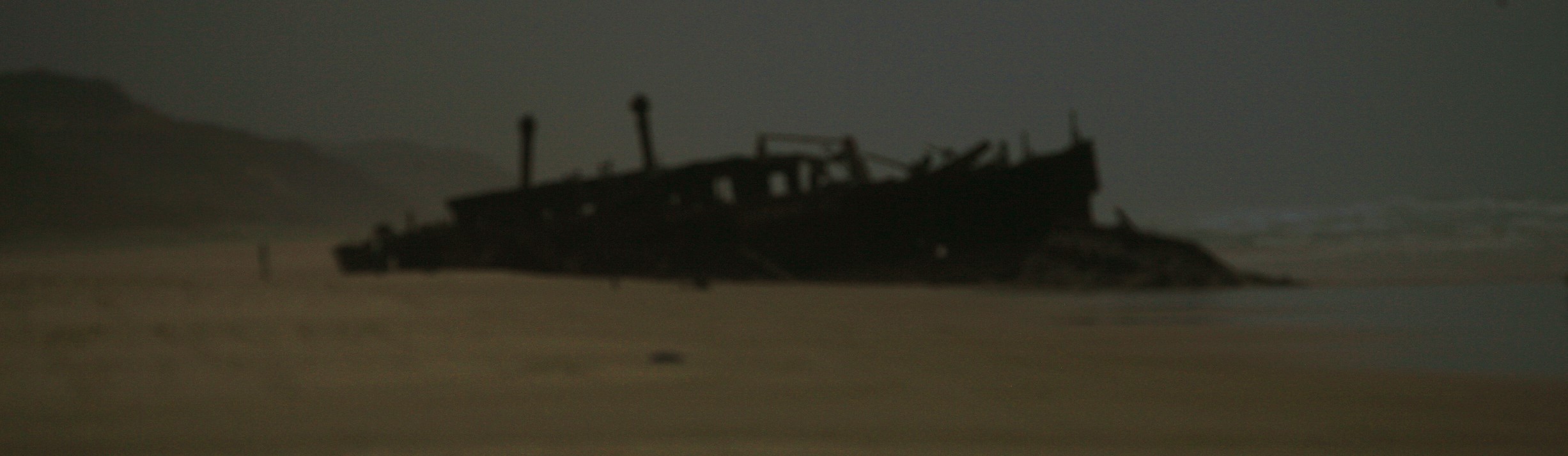
As the rusting wreckage of the Maheno emerged from the sea spray in the distance we knew were almost back at camp again where the kids needed to be woken up, having fallen asleep in the car, after another exhausting day on Fraser Island

Rusting hulk of the Maheno

Rusting hulk of the Maheno

Categories: 4WD, Adventure, australia, Australian Outback, Beach, Big Lap, Discover Australia, Explore Australia, Journey Narrative, Kids Travel, National Park, Natural World, Offroad, Photography, Photos, QLD, Queensland, Road trip, Travel, Travel Adventure, Wildlife | Tags: , , , , , , | Leave a comment

Fraser Island (Part 1)

After over a week’s unscheduled stay in Noosa it was time to revisit our last major 4WD challenge of our trip, Fraser Island.

Having visited twice previously the plan this time was to explore beyond the typical tourist attractions. Previous trips had been restricted to 3 days and had seen us staying on the south east side of the island exploring only half of one side of the island.

Personal ferry service to Hook Point

Personal ferry service to Hook Point

The ferry terminal at Inskip Point is a beach of soft sand 100m from the unsealed road. As we drove onto the beach the ferry had just departed, but as I accelerated across the beach the skipper must have seen us, reversed and returned to pick us up. The ferry was empty so we got our own personal ferry service which made it seem worthwhile considering the rather pricey cost for a 5 minute crossing. The deckhand joked that he would save us a place on our return trip in a week’s time.

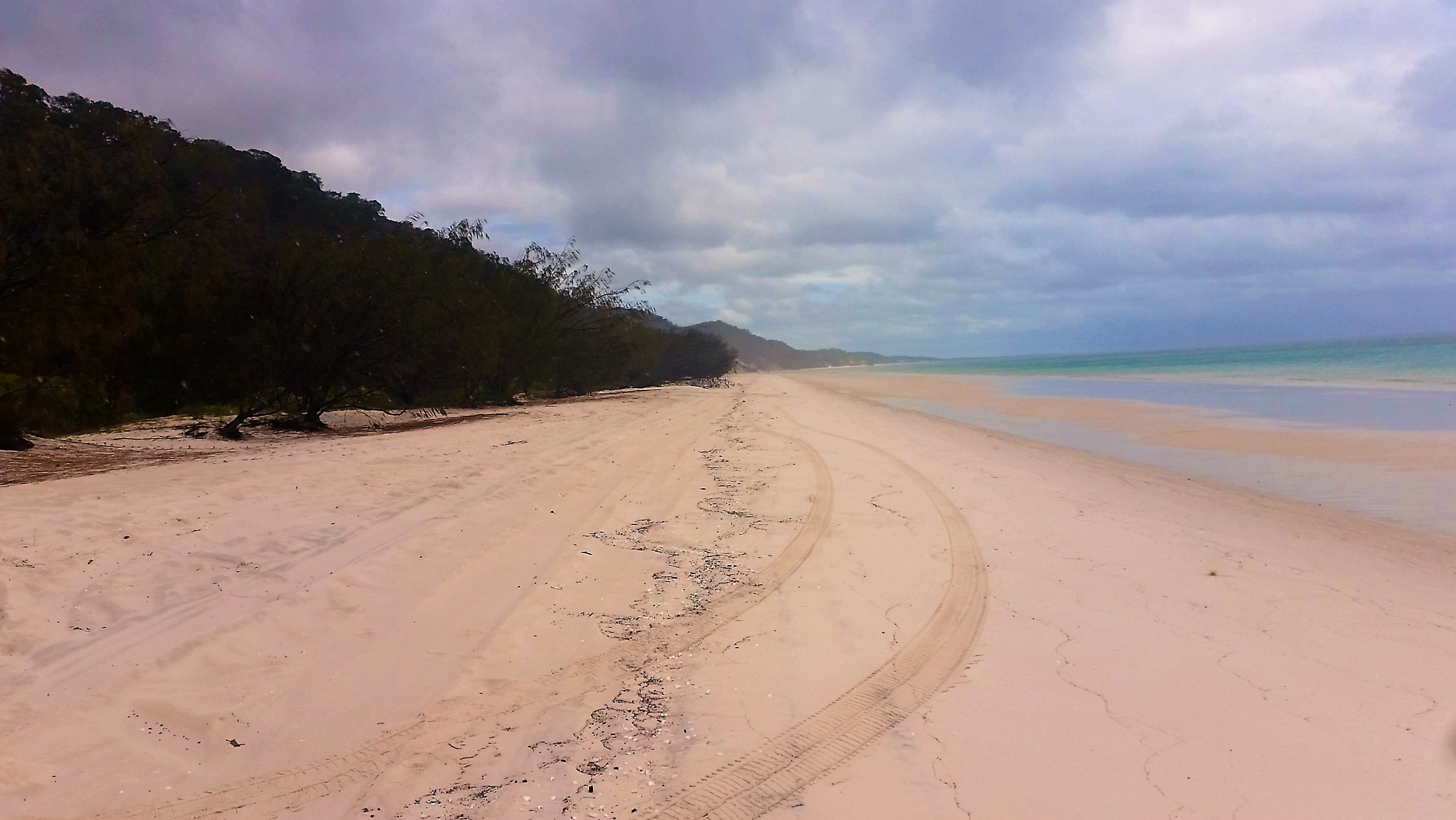
We had timed the tides well and drove from Hook Point along the beach and up the eastern beach, some 65km to Yurru campsite, just north of Cathedral Beach camp. The beach is under normal road regulations with a speed limit of 80km but following recent rain the unwary can be caught out at this speed with washouts.

Despite being the largest sand island in the world, over 100km long and 20km wide, there is no shortage of static and flowing freshwater and the erosion of beach sand caused by creeks can cripple the suspension of even the most sturdy cars if hit too fast.

Driving up the beach we were treated to the sight of two inquisitive dingos, then as we approached the Eurong settlement six dingos including young pups were running around the vehicles of some fishermen. Nothing beats the traditional dingo welcome to Fraser island. A ban on dogs on the island has retained the pure-bred status for these dingos as inter-breeding often occurs back on the mainland.

Shortly before Yurru camp the majestic wreck of the Maheno emerged through the sea spray in the distance.

The Maheno sank in 1935, washed ashore in a cyclone, but sufficient remains make it an interesting stopping point for tourists. Original wooden decking still lines some of the wreck, even after exposure to daily tides and the occasional cyclone storms over the last eighty years.

On our first day a transmission warning light came on and when actions recommended by the car manual failed to rectify it we were in a bit of a quandary. It still drove so we chose to ignore it until we got off the island again!

With a very changeable and wet long range weather forecast we chose to explore as much as we could in the first two reasonable days.

The northern forests scenic drive took us initially to a lookout over Knifeblade sandblow where the tops of overrun treetops poked starkly out of the sand. Lake Allom, further inland offered a warm refreshing swim amongst the freshwater turtles. We then took a couple of tracks to explore the western coast, Awinya and Woralie creeks. With a prevailing easterly wind, it was nice to experience calm beaches with no surf on the western side of the island. The camp at Woralie was very attractive though the creek crossing was very deep and not one that we were prepared to attempt. We were half way across when I decided it needed to be waded and when the water reached my chest I was glad I hadn’t proceeded.

Woralie Creek beach

Woralie Creek beach

It was fun to watch a car coming the other way, without a snorkel, as the bow wave poured over the bonnet and up their windscreen.

We explored another track that headed towards Moon Point but not being the scheduled track resulted in many scratches and a nasty ding in the side of the car. To add insult to injury the last 7km to Moon Point were closed.

The track leads through magnificent forest, where mature trees dwarf the cars as they pass through. Giant Kauri trees give way to lower scrub and the outlook continually changes. The narrow roads are restricted to 30km and constantly keep the driver busy negotiating the way through natural obstacles and fallen trees can easily halt progress.

Categories: 4WD, australia, Australian Outback, Beach, Big Lap, Camper Trailer, Discover Australia, Explore Australia, Journey Narrative, Kids Travel, Mitsubishi, National Park, Natural World, Offroad, Photography, Photos, QLD, Queensland, Road trip, Travel, Travel Adventure | Tags: , , , , , | Leave a comment

1770 (Seventeen Seventy)

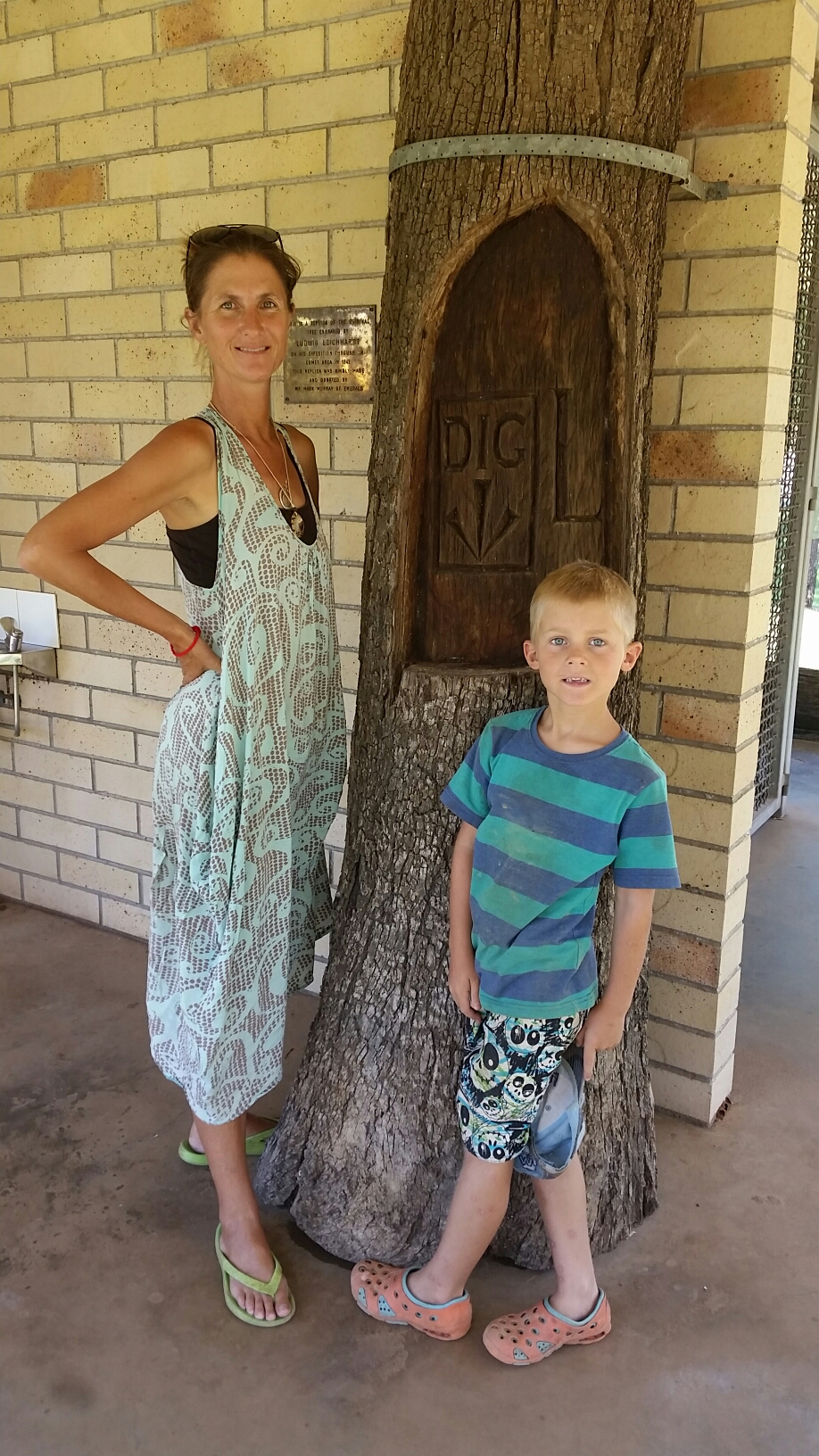
Leichhardt dig tree at Comet

Leichhardt dig tree at Comet

We had organised a catch up with my cousin and his partner at 1770, one of his favourite fishing and camping spots. As a special bonus my aunt was driving up with them too. Leaving the gem fields on the Capricorn Highway we very quickly arrived at the town of Comet, famous for the Leichhardt Dig Tree. In 1844 the explorer Ludwig Leichhardt marked a tree to indicate where his team had buried food and journals. Today a replica of the tree marks the point and made for a timely break.

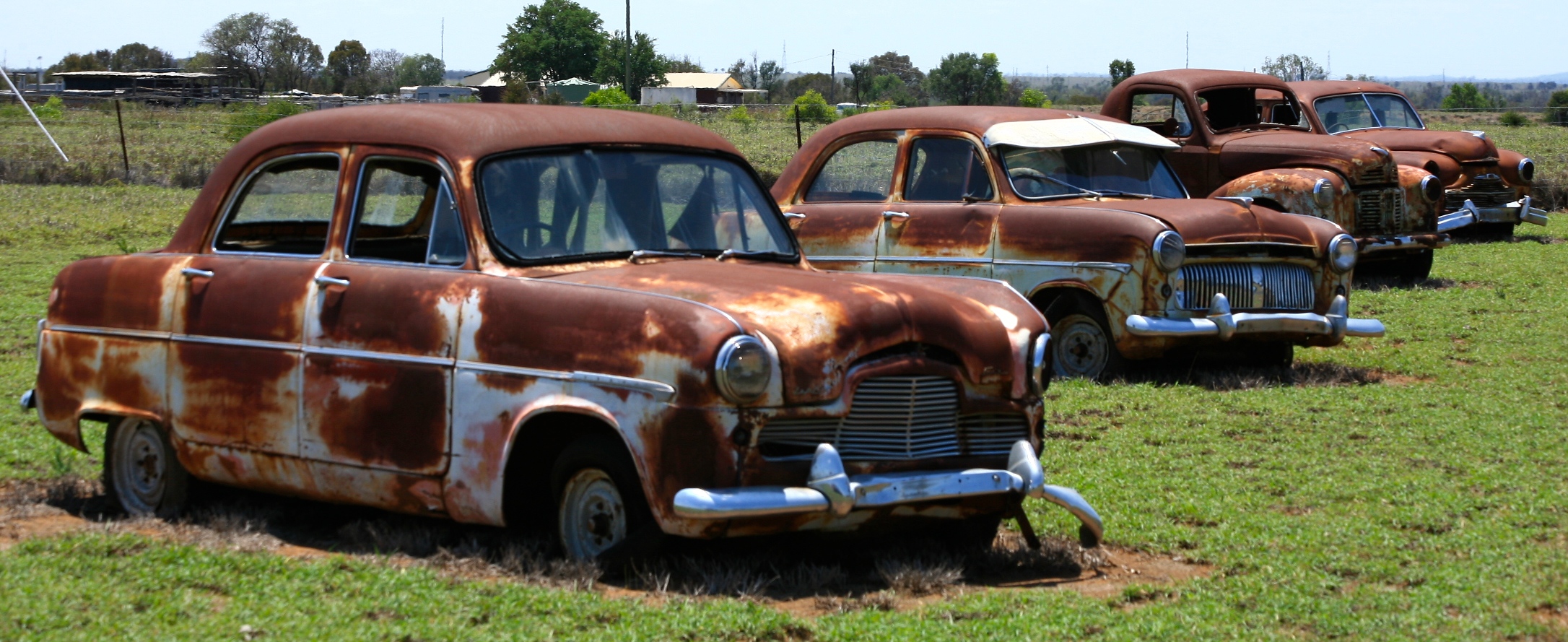
Car graveyard

Car graveyard

We also passed a collection of holding rusting car frames by the side of the road.

Roadside Trivia

Roadside Trivia

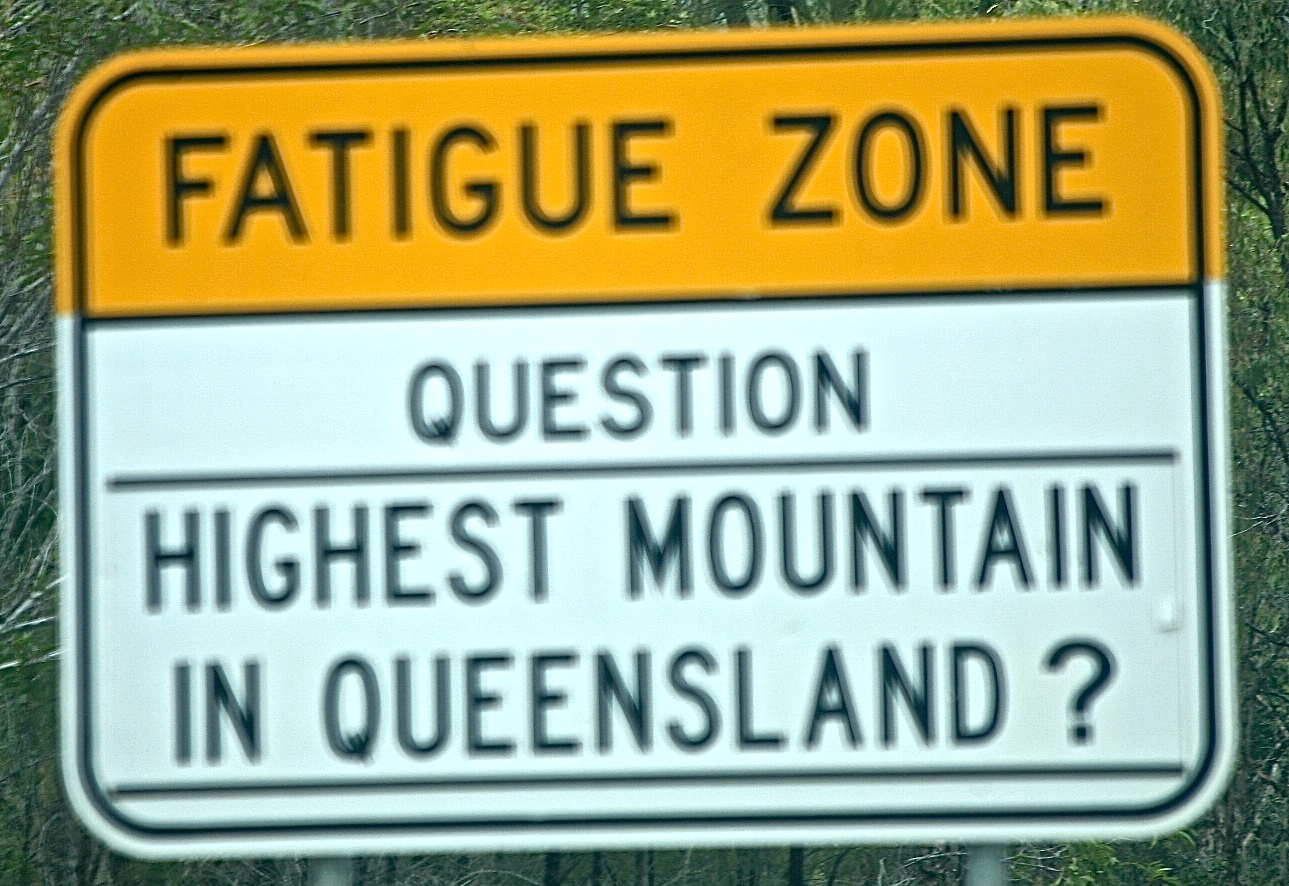
Along the Capricorn Highway there is a novel technique to reduce driver fatigue.

Roadside trivia

Roadside trivia

Highway Trivia questions are posed on signs to ponder with answers displayed several kilometres down the road.

Whilst a great idea, the execution is poor as the questions don’t change, being fixed signs, and are destined to work only once.

The village of 1770 was built where James Cook landed for the second time on the HM Bark Endeavour in May (the first being Cooktown), although it was only renamed from Round Hill in 1970 to commemorate the bicentennial of the event. Situated on a peninsula facing the Eurimbula National Park and Bustard Bay, to the west, it was nice to be protected from the prevailing easterly winds we had been exposed to at coastal locations.

For us it was family time, catching up with my aunt, cousin and his better half. Hannah was keen to learn how to knit and my aunt patiently taught, then fixed dropped stitches time and time again as a woollen scarf grew by the day until complete. Xavier did what he loved, fossicking for treasures along the beach and Oscar and I joined my cousin fishing.

My aunt Myra had devoted so much effort preparing food for the weekend that she forgot to bring her bag packed with her clothes so the girls went off shopping. Unfortunately there are not many shops but suitable beach attire was found, and duly christened, with much mirth, as the “Sausage Dress” due to it being located on a rack next to the meat in the general store.

Myra treated us all to a trip on the famous pink LARC. These aluminium-hulled amphibious vehicles are LARC-V (Lighter, Amphibious Resupply, Cargo – 5 tons in weight) and were built in the 1950s in the USA. Our tour commenced with a 50m drive down the road then plunged into the river and across onto the beach on the Eurimbula NP side, where we were treated to a knowledgeable talk on the birdlife. The passion and local knowledge of our driver was welcome on a wet and overcast day, even the kids got to drive the LARC along the beach, sometimes even into the water.

Back at camp we relaxed and talked, caught up on news, and even took my cousin Geocaching. The weekend flew by and before we knew it we were packing up once again saying goodbyes until we were due to meet up again further south.

In a cruel and tragic twist, after such a beautiful weekend, my Aunt died on the return trip and our plans rapidly changed. Whilst feeling totally empty having been robbed of such a beautiful person so suddenly, we were lucky to have spent some great time with her, and our memories of that weekend will be cherished by us forever.


Categories: Adventure, australia, Australian Outback, Beach, Big Lap, Discover Australia, Explore Australia, Journey Narrative, Kids Travel, National Park, Queensland, Road trip, Travel, Travel Adventure | Tags: , , , , , | Leave a comment

Sapphire hunting

A spur of the moment decision found us travelling inland again towards the exotically named towns of Emerald, Sapphire and Rubytown. Fossicking fever had grabbed us again and against our better judgement with temperatures forecast to reach high 30’s over the next few days we decided to seek fame and fortune in the gem fields.

Arriving late we made a call and booked an early morning trip out with a guide to fossick. We had seen the bags of sand wash sold for varying amounts up to $20 but knowing that these are “seeded” with a few fragments and sometimes a cut sapphire but we wanted to experience it first hand.

That night storm clouds gathered and a fierce lightning and thunderstorm was unleashed upon the town. Judging by the dusty roads and lack of foliage it must have been a welcome downfall. Our Kiwi guide greeted us early the next morning at a crossroads and we drove off. Somewhat unimpressed that we had picked his usual day off he showed us what to do and retired to the comfort of his air conditioned 4WD. At 8am it was 30 degrees. By 9am it was 33 degrees and climbing rapidly.

The extraction process is quite straight forward. Take a pickaxe and/or mattock, select a piece of land, preferably where an old river bed has been and start digging. Shovel into buckets, walk them to a rotating mesh drum, pour in, turn the handle and the heavier dirt is filtered off into another bucket. This bucket is then walked to the Willoughby wash where it is poured onto two sieves, the bigger mesh on top. Each sieve in turn is placed in the Willoughby wash, basically a big bucket of muddy water, with a handle that is cranked up and down. The correct cranking speed is important to prevent losing all your wash into the bottom of the bucket. If done well, all the heavier stones, hopefully including the sapphires, accumulate in the centre of the sieve. The final steps are to turn the washed gravel over on a hessian bag and starting from the centre, working out, look for the glassy sapphires.

This was repeated again and again and when the temperature rose to 35 degrees our guide called for a tea break from the air-conditioned cabin of his vehicle. We couldn’t refuse. The kids enthusiasm had faded quickly and to his credit our guide had noticed this and discretely scattered sapphire fragments on a discard pile. When pointed out to them it took them another 30 minutes to pick them all out.

We continued until my hands were so blistered I couldn’t wield the pick any longer and we called it a day around noon with a very paltry collection of sapphires of blue, yellow and green.

Back at the caravan park the kids found someone had left a sieve lying around and they grabbed it so they could start sieving the gravel in wheelbarrows there. A few more sapphires were found but it hasn’t changed our plans for retirement!

Very dusty, thirsty, and tired we headed for the local swimming pool that opens at 3pm and had a very cheap and enjoyable cool down with a few grey nomads who were telling us about their mining claims. No fortunes found there either, though it seemed to be more of a social endeavour. We had been told that anyone with a claim was allowed to graze camels and cows on the common land but given the lack of fodder they had recently been rounded up and removed somewhere else. All we witnessed in the morning was a small flock of about a dozen guinea fowl foraging along the roadside and into the campground.

It was a brief but interesting experience fossicking for sapphires but clearly a tough life for those who choose that path. It seems that the smart money is made from giving the tourists the experience rather than finding the sapphires though a few we met reckoned they did alright from the fossicking on claims.

A final visit to Pats Gems was required to get expert opinion on our finds and luckily for us they confirmed we had indeed found some genuine ones.

Categories: Adventure, australia, Australian Outback, Big Lap, Discover Australia, Explore Australia, Journey Narrative, Kids Travel, Queensland, Road trip, Travel | Tags: | 2 Comments

Mackay and surroundings

With our wheels firmly back on the bitumen again it seemed fitting to indulge in a little luxury and as we headed down the coast towards Dolphin Heads, near Mackay, watching the sugar cane harvesting in progress.

The road down the coast is regularly transected with small gauge railway lines that are used by sugar cane farmers to transport cane or mulch to and from the processing factories. We witnessed plenty of activity with harvesting in the fields, loading and movement of the trains and the processing factory chimneys puffing away, indicative of the industry inside.

Dolphin Heads Resort

Dolphin Heads Resort

In Mackay we stayed at the beautiful Dolphin Heads resort for a few days lounging by the pool, relaxing.

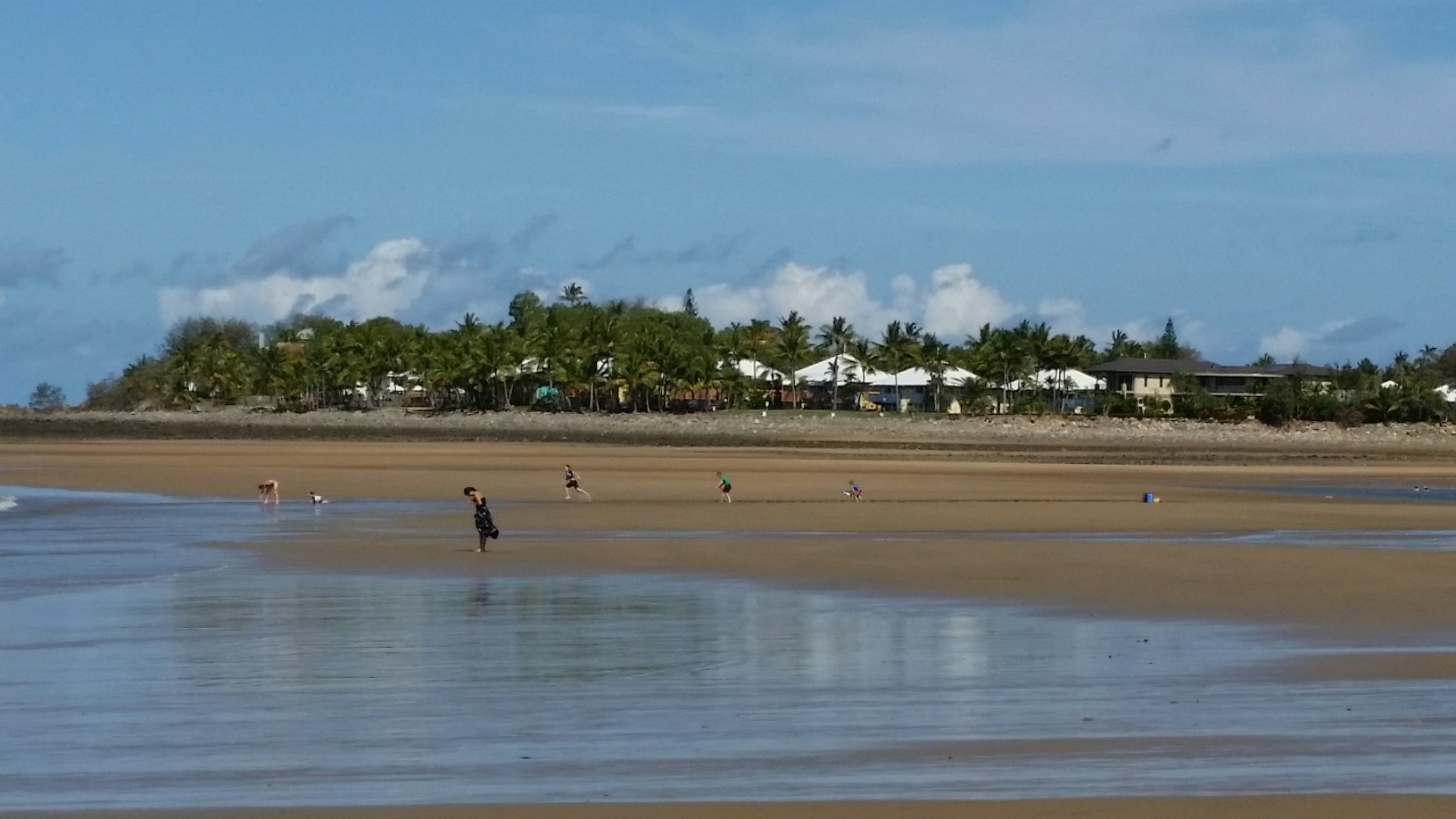
View from beach of Dolphin Heads

View from beach of Dolphin Heads

We drove to Eungella National Park looking for platypus in the pouring rain. We found plenty of birds including the particularly colourful scarlet honeyeater there but only one platypus in Broke River.

We explored Blacks Beach, Eimeo and the city of Mackay but it was a time for winding down and relaxing.

Categories: australia, Big Lap, Camper Trailer, Discover Australia, Explore Australia, Journey Narrative, Kids Travel, National Park, Queensland, Road trip, Travel, Travel Adventure, Wildlife | Tags: , , , , , , | 1 Comment

Postcard from Xavier

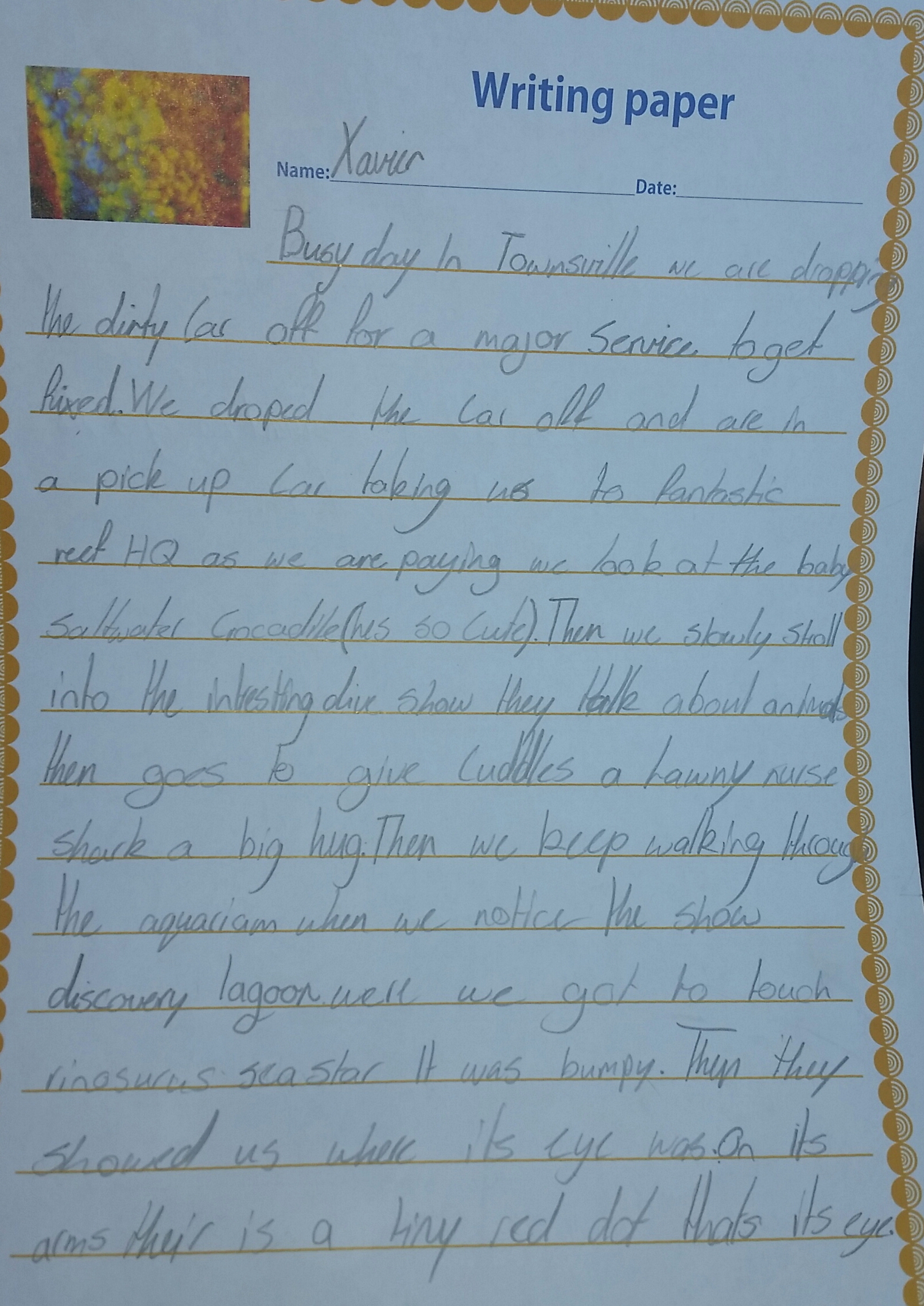
Xavier's journal

Xavier’s journal

Busy day in Townsville!

We are dropping the dirty car off for a major service to get fixed. We dropped the car off and are in a pick-up car taking us to the fantastic Reef HQ. As we are paying we look at the baby saltwater crocodile (he’s so cute). Then we slowly stroll into the interesting dive show where they talk about animals, then goes to give cuddles, a tiny nurse shark, a big hug.

Then we keep walking through the aquarium when we notice the show at the Discovery Lagoon where we got to touch a rhinoceros seastar. It was bumpy. Then they showed us where its eye was. On its arms there is a tiny red dot that’s its eye.

After we watched the predator feeding and the coral exhibit full of fish.

Treeny the green turtle got a very good feed and even came a metre away from the tunnel.

Overall I recommend going to Reef HQ because I loved it.


Categories: Animal Action, australia, Big Lap, Discover Australia, Explore Australia, Journey Narrative, Kids Travel, Natural World, Queensland, Road trip, Travel, Travel Adventure | Tags: , | 3 Comments

Wallaman Falls and the S.S. Yongala

Wallaman Falls

Wallaman Falls

The highest single drop waterfalls in Australia are Wallaman Falls. A relatively small deviation from Ingham took us up into the hills again and after a steep climb over 500m from sea-level, into Girringun National Park, we were confronted with a surprisingly spectacular sheer cliff face where the water plunges 268m into a pool below that is 20m deep. It was well worth the visit and we even got five minutes of sunlight between the drizzle.

We’d set ourselves a long drive for the day so after a brief lunch we set off back down the hill to the coast. We didn’t stop in Townsville and a last minute change of plan saw us head for the town of Ayr, 100km south from Townsville.

I had booked a dive the next day on the S.S. Yongala, reputed to be one of the best wreck dives in Australia. With winds forecast at 25 knots I was expecting a cancellation but it was confirmed and my excitement levels rose as I had only done one dive in the last 11 months. We also had the car booked for a service in Townsville the next day so poor Amanda drew the long straw to drive back the 100km with the kids. We were told it could be serviced in Ayr but when we phoned the garage at 5pm the response was that the service desk was closed – better to go where they understand customer service.

The morning was sunny again with less wind and I was dropped at the dive shop at 7.30am. The kids were actually excited because they had been promised a trip to the aquarium where a whole portfolio of talks awaited them.

The S.S. Yongala was a passenger ship that sank in 1911 in a cyclone as it headed north up the coast on its 99th voyage to get a refit. All 122 on board died but the wreck was not found until 1958. The Navy performing a mine sweep in the area had noted its probable position in 1947 but the charts with notation were only rediscovered later. The wreck is accessed via a 30 minute bumpy ride in rigid hull inflatable dive boat.

The wreck itself lies on sand and as such provides an artificial reef for a plethora of underwater life. The wreck is covered with corals and among these a profusion of small fish thrive. Schools of damselfish and glass fish shimmy and start in unison as larger predatory trivially and mackerel cruise past. Coral trout and enormous cod lurk in the shadows of the holds, and under the rusting infrastructure. Large Moray eels surveyed the scene from their hide holes and Batfish the size of dinner plates cruise around in small schools. The more you look the more you find. Turtles kept popping up all over the wreck, as did the highly venomous and ever-curious olive sea snakes. Dense schools of jacks and other medium sized fish aggregate at the bow and stern, barely moving as you swim through them. We  were blessed with great visibility making it an unforgettable day’s diving.

Unbeknownst to me my kids were revelling in a more controlled marine environment at the same time. On my return they were gushing over Myrtle the one-eyed Turtle that they saw in the turtle hospital (of course), and the talks they had been religiously attending all day in Townsville aquariuwm, Reef HQ. They had been watching Nemos at close quarters, had up close fun in the discovery lagoons and even tried on old school pearl diving helmets.

This was a day to remember!

Categories: Adventure, Big Lap, Discover Australia, Explore Australia, Journey Narrative, Kids Travel, National Park, Natural World, Photography, Photos, Queensland, Road trip, Travel, Walks | Tags: , , | Leave a comment

Postcard from Oscar

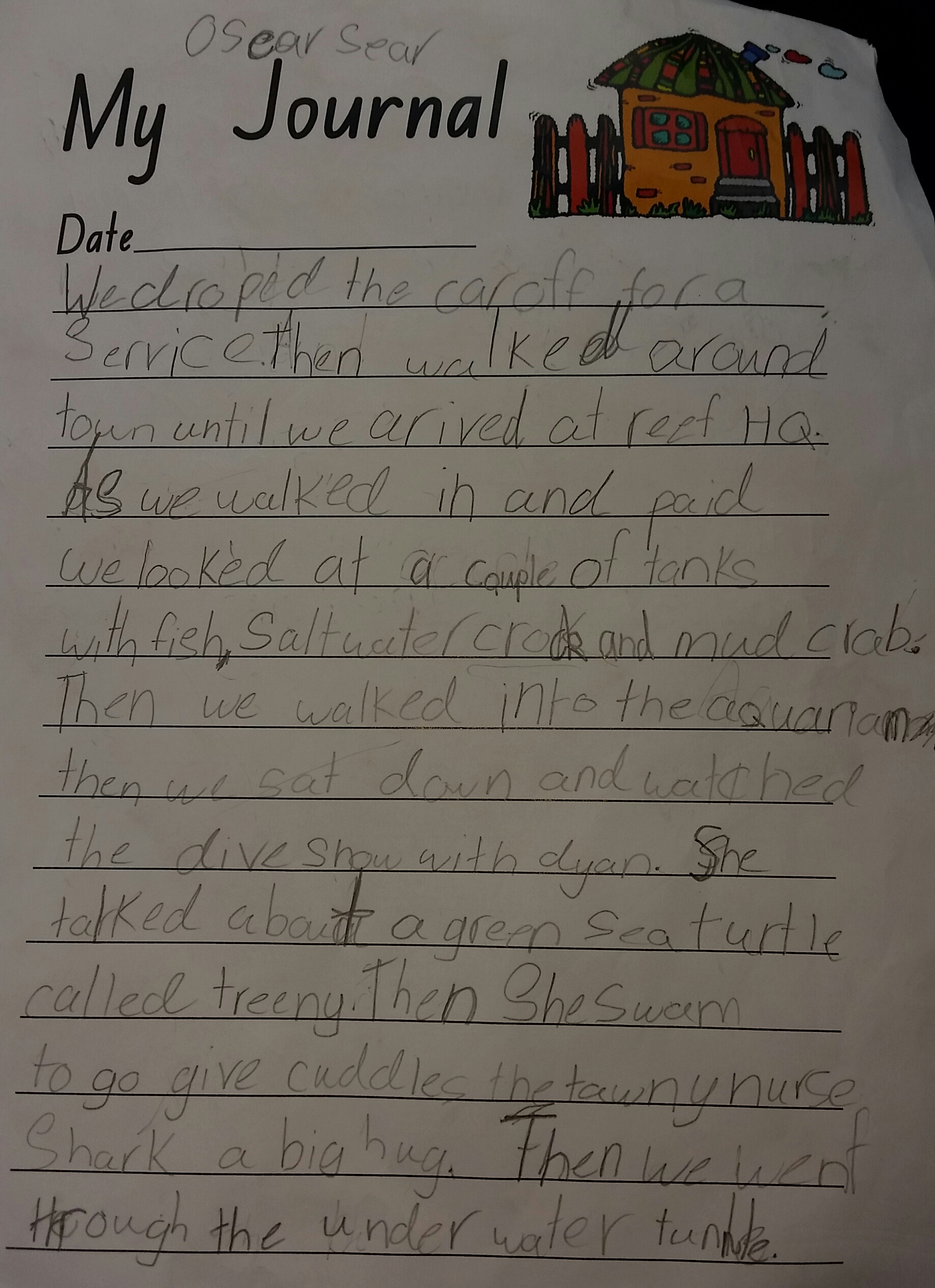
Oscars journal

Oscars journal

We dropped the car off for a service (in Townsville – editors note) then walked around town until we arrived at Reef HQ. As we walked in and paid we looked at a coupe of tanks with fish, saltwater crock and mud crab.

Then we walked into the aquarium, then we sat down and watched the dive show with Dyan. She talked about a green sea turtle called Treeny. Then she swam to go and give Cuddles, the tawny nurse shark, a big hug.

Then we went through the underwater tunnel. Then we walked to the Discovery Lagoon. There are starfish you can touch, then they fed a stingray, then we walked to the predator feeding. They feed all the fish, sharks and turtles. They feed them big fish heads, prawns, and little fish.

Then we went to a turtle hospital where they help turtles.

Categories: Adventure, Animal Action, australia, Big Lap, Car, Discover Australia, Explore Australia, Journey Narrative, Kids Travel, Natural World, Queensland, Road trip, School, Travel, Travel Adventure | Tags: , , , | 2 Comments

Mission Beach

Cassowary

A Cassowary preens itself in the afternoon sunlight

Back to the coast we headed, taking a less precipitous road, descending 900m again towards Innisfail, then south to Mission Beach, driving past Djiru National Park before entering the quaint tourist village. The council operated caravan park sits behind the beach and offers powered sites for next to nothing so we settled in for a few days. We needed to get some schoolwork done with the kids, and the nearby library beckoned.

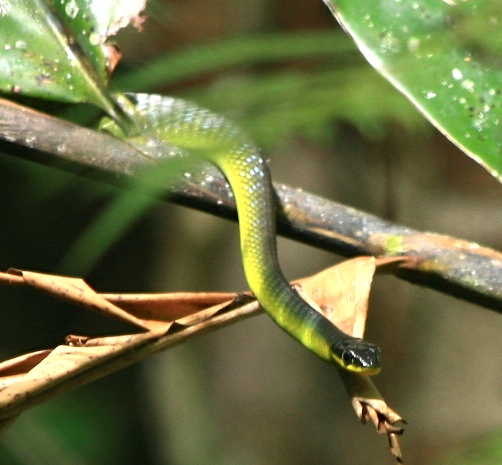
IMG_0137The National Park appeared to offer much better walking tracks than in Cape Tribulation so we set off initially on a short walk at Lacey Creek. The narrow path snakes through the thick forest, criss-crossing the creek and a few tell-tale cassowary droppings littered the track but none were spotted. I got mesmerised for 20 minutes watching a tree snake exploring the forest, systematically checking branches for food.

We walked the 3.2km Dreaming Trail, witnessed more cassowary droppings, oversized mounds of semi digested seeds, littering the path, but still no sightings. Many of the seeds were already germinating proving how effective the bird is as a jungle gardener.

With interest waning in the rain only Xavier and I continued from this track onto the 6km Musgravea track to Licuala. There was so much evidence of cassowaries that we were very optimistic about seeing one and sure enough 3km in a beautiful big specimen stood preening itself in the sunlight in the middle of the track. We carefully approached to about 20m, as these birds can be dangerous, particularly if protecting their chicks, but at this point it ducked into the undergrowth never to be seen again. A further 50m on and we encountered an echidna, an animal that we haven’t seen for ages.

This slideshow requires JavaScript.

Back at camp the kids were very excited to find a few very large and carefully compiled humpys on the beach, spending plenty of time hanging out in them with other kids. It was good for them to find lots of kids around their age that they could let some steam off with.

The adjacent park was lined with rather attractive palms with clumps of fruit of different colours hanging below the leaves and Amanda got particularly excited when she found out there were markets on whilst we were there. She returned with bags of local produce, including monster bananas a bargain at 14 for a dollar! Oscar scored himself a huge second hand tackle box for 4 dollars, Hannah headed for the pineapple slushie stall, and Xavier spent time at the gemstone stall. He later returned with his collection to show the man.

The laid-back feeling around Mission Beach was very appealing but the dreary weather that had commenced once we hit the rainforest, continued. The wind and rain prevented us from visiting nearby Dunk Island but it was still very relaxing and the kids completed a big chunk of work for school. The time to leave came too soon

Categories: 4WD, Adventure, Animal Action, australia, Australian Outback, Beach, Big Lap, Discover Australia, Explore Australia, Journey Narrative, Kids Travel, Natural World, Photography, Photos, Queensland, Road trip, Travel, Travel Adventure, Walks, Wildlife | Tags: , , , , , | Leave a comment

Create a free website or blog at WordPress.com.