In between last blogs we had an overnight stay at Murphy’s Haystacks. Not much too add other than to display the photos – a very photogenic spot and gave me time to find out more about my camera, what it can and can’t do, and experimented with a few new shots.
Natural World
Coffin Bay National Park
Another short drive west from Lincoln National Park brings you to Coffin Bay National Park. Determined to keep up the adventure we decided to camp at Black Springs, the tides were in our favour so we drove down to Yangie Bay, deflated the tyres and headed on. We had a temporary bog that took five minutes to get out of then plain “sailing” from then on in, albeit quite rocky and rough in places.

Anemone

Dead Dolphin on the beach

Crab

Shell on beach

Seven Mile Beach

Running down dunes

Beach Tree

Shell

Point Sir Isaac

Avoid Bay

Seven Mile Beach

Beach in Coffin Bay

Seven Mile Beach Sand Dunes

View from the camp

Goby

Fiddler Ray
Despite being a very dusty campground, the site we chose was on the edge of a low cliff directly above the beach. With its own bench it offered glorious views across the bay to the east. We took the Black Rocks hike to Avoid Bay, a 3.8km walk across the peninsula. A large osprey nest perched prominently on top of a stack below the cliff and a pair of ospreys circled, one with a fish in its talons. The beach was really shallow and water warm so we spent some time snorkelling to cool down. Plenty of fish life but nothing big enough to catch for dinner without a boat!
We took one day with just the car to explore the whole National Park. There is plenty of 4WD fun to be had with lots of sand to Morgans Landing, then rocky to Point Sir Isaac where we watched sea lions and dolphins cruising up and down the coastline. Sensation Beach presented a dune that appeared to go nowhere from below, but in fact a right turn at the crest takes you down to a huge surf fishing beach. On our return we stopped at the big sand dunes beside Seven Mile beach and let the kids run up and down them for an hour.
A short excursion from the campsite to Black Springs Well was worth the walk. The hand pump finally brought forward a brown stream of water that did go clear, albeit full of organic detritus. The park also has a number of wells dug by 19th century Whalers which we found on our excursion around the park
Categories: 4WD, Adventure, australia, Australian Outback, Big Lap, Discover Australia, Explore Australia, Journey Narrative, Kids Travel, National Park, Natural World, Photography, South Australia, Travel, Travel Adventure, Walks
Tags: Black Rocks, Black Springs, Black Springs Well, Coffin Bay National Park, Eyre Peninsula, Morgans Landing, Point Sir Isaac, Sensation Beach, Seven Mile Beach
2 Comments
Lincoln National Park – Memory Cove
A short drive from Port Lincoln brought us to Lincoln National Park, and we drove down the 4WD track to Memory Cove. During Matthew Flinder’s trip to the area in 1802, eight of his crew took a boat to shore, foundered on the reef near Cape Catastrophe, and lost their lives. The surrounding offshore islands were individually named after them and Memory Cove as a reminder of the incident.

Xavier watches a show

Memory Cove

Sea Hare

Dolpins

Sealion

White-bellied sea eagle

Sealion

Sealion

Mother and baby dolphin
Access is via a padlocked gate and a very rough road takes you to the beach. Unfortunately as soon as you arrive a swarm of bees descends looking for water, so the full awning went up to protect us, but not before I accidentally trod on one and got stung. Once set up things got better and the next few days were spent exploring the beach, shoreline, surrounding area and a bit of fishing. Wildlife abounds in the National Park and when Xavier wasn’t finding sea hares, peninsula brown snake jawbones and more besides we were watching Australian sea lions frolicking around the bay, and sea eagles flying overhead. We even got to watch a newly born baby dolphin being taught the ropes by its parents in the shallows of a nearby beach. It was tiny, barely a metre long and looked very clumsy when it surfaced to breathe, pushing its whole head and torso out, rather than just exposing the blowhole. Fish were everywhere and when the wrasse had stopped eating all the bait the big stuff came out (around dusk). Having watched swimmers in the sandy shallows it was a bit unnerving to see a 2+m bronze whaler cruising in knee-deep water two nights on the trot. Memory Cove is famous for the presence of Great White Sharks in the murky depths but this was 10m from the shore. That said I couldn’t resist slipping into the water at a spot where the sea lions were hanging out to try and get a photo. Unfortunately they were very wary and not as inquisitive as I was hoping they would be in the water. When I didn’t have a camera at hand they were more than happy to mock and put on fantastic jumping performances as we approached. I landed a large eagle ray on the last night after a 30 minute battle, and released it back.
Categories: 4WD, Adventure, Animal Action, australia, Australian Outback, Beach, Big Lap, Discover Australia, Explore Australia, Journey Narrative, Kids Travel, National Park, Natural World, Photography, South Australia, Travel, Travel Adventure
Tags: Cape Catastrophe, Dolphin, Eyre Peninsula, Lincoln National Park, Memory Cove, National Park, Port Lincoln, Sea eagle, Sealion
1 Comment
The Oodnadatta Track – part 3
Past more ruins of the Ghan railway’s former glory and then we arrived at Algebuckina Bridge.

Fish from waterhole


Grave at Dutton

Comparing catches


Algebuckina waterhole


Road hazard

Playing in the waterhole


No kidding! 40 degrees plus

Morning view of bridge

Examining the catch

Algebuckina bridge

Floating in the waterhole

Only one way out

At Algebuckina bridge

Algebuckina bridge

Algebuckina bridge

First Yabby

Ruins

Desert blooms

Algebuckina bridge

My plate almost finished

The road from Oodnadatta
After a quick look at the bridge, because it was 42 degrees again and late in the day, we headed for the waterhole, less than a kilometre away on the other side of the road. This campsite got the big thumbs up from 80% of Fifty Toes due to the fact no-one else was there, we were right next to the waterhole, gorgeously deep warm water, fishing, and yabbying. Ok, admittedly there were a lot of pestering blowflies, but there were heaps of fish, even pelicans circling above. This was an oasis in an extremely arid place. Little prawns nibbled our skin as we lay in our inner tubes in the middle of the waterhole. Even as we left the waterhole only a few mosquitos were present.
Overnight a refreshing strong wind blew most of the night providing some relief from the heat, but as I emerged from the canvas in the morning the largest, most vicious cloud of mosquitos lifted from the outside of the canvas and within seconds threatened to engulf me. What followed was a record time decamp with everyone dressed in full length clothing. I missed the photo of Amanda in waterproof jacket, long pants in 33 degrees. No breakfast until we stopped at Dutton Ruins further up the road.
Our stop at Oodnadatta itself was brief. The sign says Australia’s hottest driest town and with 40 degree heat we were not about to dispute the fact. The Pink Roadhouse is the iconic establishment in a rather run down town. Back into the bush we encountered road hazards, flagged to warn oncoming dangers, then the Angle Pole. The bent pole, a few kilometres out of Oodnadatta, indicates the point where the Overland Telegraph Line and the Ghan both changed direction turning north.
From here we pressed on to Marla and witnessed a beautiful sunset and jumped in a pool to cool off. A bit rushed but a first glimpse at the Oodnadatta was fun and gave us a true insight to the hardships endured by early settlers and pioneers and the people who established both the Overland Telegraph Line and the Ghan railway.
Categories: Adventure, Australian Outback, Big Lap, Discover Australia, Explore Australia, Journey Narrative, Kids Travel, Natural World, Offroad, Photography, South Australia, Travel, Travel Adventure
Tags: Algebuckina, Angle Pole, ghan railway, Oodnadatta, Oodnadatta Track, Pink Roadhouse
2 Comments
The Oodnadatta Track – part 1
The road from Marree to William Creek had now opened for the first leg of the Oodnadatta Track so we continued north. Amanda’s trepidation was clearly visible.

Margaret Creek

Bib Bubbler spring

Fish in Margaret Creek

Farina

Stone Man memorial

Coward springs fun

Parched earth

Coward springs


Ironman sculpture

Ready for action – Margaret Creek


Aboriginal Ochre pits

Oodnadatta Track starts here

Car at Farina

Ruins at Farina

Brolgas

Water in Lake Eyre south

Ghan remnants at Marree

Who is looking at who?

Blanche Cap, Mound Springs

Marree Hotel sunrise

Our drinking buddies at Marree
The first stop was Parachilna, home of the feral food or “Roadkill Café” at the Prairie Hotel, but it was closed for summer! Next stop the aboriginal ochre pits where the rock for painting is taken. Quite a few colourations were visible from white through to red and orange.
Farina ruins lies just north of Lyndhurst and is the ghost town of what once was a flourishing township of 600 people, with two hotels, stores, an underground bakery (restored and used once a month these days), church, stores and much more. Covering quite a wide area it is worth spending some time exploring. The campsite was uncharacteristically green and luxuriant for the area and had we not been on a mission we would have stayed there. Onwards to Marree, the start of the Oodnadatta Track.
With the temperature approaching 40 degrees we pressed on to the Marree Hotel, where we met locals from Roxby Downs, Tim, Tony, Rachel and Sandra with whom we shared a few too many drinks and got some great local knowledge regarding swimming holes along our route. The Marree Hotel was great – we even had dinner there but soon enough dawn arrived and we had to leave.
The Oodnadatta Track is 600km of unsealed road from Marree, via William Creek, Oodnadatta to Marla best suited to 4WD vehicles that follows the course of aboriginal trading routes and the old Ghan railway. The track passes many remnants of the railways former glory days and the springs that made the route passable on foot for aboriginal traders.
Shortly after we started the track we witnessed brolga cranes, then some fantastic metal sculptures strewn across an artists property (in the middle of nowhere), then our first proper stop was to view Lake Eyre South and we could clearly see water fairly close to shore – it was starting to arrive again after local rains and storms in Queensland which feed the lake from the north.
Next stop was the waterhole at Margaret Creek, flowing quite quickly towards Lake Eyre South. The fun here ceased pretty quickly when the kids went under the road, on inner tubes donated by Tony and Sandra, and flushed out a swarm of mosquitos that appeared to have been fasting and awaiting our arrival. If that wasn’t bad enough Oscar dived in hit a rock and gave himself a massive “egg” on his forehead that made him look like Cyclops. Before we left though we had time to witness the hordes of fish and prawns relishing the renewed water flow. The kids were picking them up in handfuls. We left with mozzies in hot pursuit.
Mound Springs were set in an unusual, almost lunar looking , white landscape devoid of plants. The springs emerge from mounds that sit in this landscape that present little oases amongst what appears to be barren surroundings. Desert gobies dart for cover amongst vegetation in the rivulets that emerge from the springs. The Big Bubbler belches up mud rings from its centre and water cascades down it’s rocky sides, whilst nearby the Blanche Cap seeps quietly through the sides of the mound. It was getting hotter by the minute so we drove on to Coward Springs. This turned out to be one of our favourites. A little walk through the bush, squeeze through a hole in the bushes and you arrive at a 2m square spa backing on to wetlands. In the close 40 degree heat this was a lifesaver, but I’m not sure how it would cope with a full campsite trying to access. No mozzies there. Onwards to William Creek.
Categories: 4WD, Adventure, Australian Outback, Big Lap, Discover Australia, Explore Australia, Journey Narrative, Kids Travel, Natural World, Offroad, Photography, South Australia, Travel, Travel Adventure
Tags: big bubbler, blanche cap, Coward springs, Farina, Ghan, lake eyre, Marree, Mound Springs, ochre pits, Oodnadatta Track
2 Comments
Flinders Chase National Park, Kangaroo Island
A very belated Happy New Year to all. Here’s hoping 2015 brings you all good health, happiness, and plenty of adventure!
Flinders Chase National Park occupies a large proportion the western end of Kangaroo Island, and when I visited Rocky River many years ago it was abundant with the stocky Kangaroo Island kangaroos, echidnas, koalas, Tammar wallabies, snakes and much more. In 2007 a bushfire swept through the park devastating two thirds of the bush, so things had changed and I think Rocky River, the centre of the park has been rebuilt.


Scorpion

Fur seal yawn

Remarkable Rocks

Fur Seal Pup

Fur Seal Pup

Remarkable Rocks


Admirals Arch looking for Seals

Long nose fur seal
Wildlife still abounds, though not quite as intrusively as previously. The animals are still there though it seemed in smaller numbers. Birdlife proliferates around the centre at Rocky River and a number of short walks around the centre provides the visitor with opportunities to see the crimson rosellas, cape barren geese, scarlet robins and lots more. The visitors centre kept the kids busy for several hours with their touch tables of local animal skins, information about the megafauna that used inhabit the area tens of thousand years ago. The centre also provides a kit bag of tools for the kids to explore the sandpit. They got to experience the thrills of archaeologists, digging up/exposing megafauna bones in a 5 x 3m pit, a great learning experience.
We had to visit Remarkable Rocks which look like a giant has scattered unusually sculptured rocks on a solid granite base. The forces of erosion together with orange lichen growth make it a imposing site perched above the southern ocean backdrop.
Nearby, Admirals Arch hosts a colony of Long Nosed Fur Seals (previously NZ fur seals) which can be smelt long before you see them (very fishy and stinky), basking in and around the significant rock arch formation it was the season for spotting pups and some very cute ones at that.
For Christmas we headed to the most western point of the island, West Bay. The campsite was barely big enough for the trailer and awning but a lovely quiet spot perched just above a clean sandy surf beach. The kids didn’t hesitate their wildlife search and within a few stone turns we had new pets – Scorpions! Yes, scorpions in all colours and sizes. The kids took great pleasure feeding them ants and showing them off to our neighbours and their kids. Santa did find us there though his reindeer appeared to have a serious scuffle with the local possums judging by the commotion during the night in the campsite.
Categories: @travelaustraliawithkids, Adventure, Animal Action, Australian Outback, Discover Australia, Explore Australia, Journey Narrative, Kids Travel, National Park, Natural World, Photography, South Australia, Travel, Travel Adventure, Walks
Tags: Admirals Arch, Canon, Canon EOS, Flinders Chase National Park, Remarkable Rocks, Rocky River, scorpion, West Bay
9 Comments
In search of a fearsome beast in the Otway Ranges!
A carnivorous loathsome beast hides in the rainforest in the Otway Ranges. It uses stealth and cunning to find its prey then devours them slowly. That’s what convinced Fifty Toes that they had to track one down and capture it. Using local knowledge we found out what areas it could be found. Driving out of Apollo Bay we found Koalas first at Kennet River. A quick stop for a photograph was required for our top 25 list (more on that later)

After the brief distraction we headed for Maits Rest rainforest walk. We walked as silently as a troop of baboons through the forest, looking everywhere, and just as the kids interest started waning, Oscar let out a cry “I’ve found one!”. Well not quite, but a very small part of one.
We chose a dirt track to take us to another likely site and 20km later we set out on the walk to Beauchamp falls
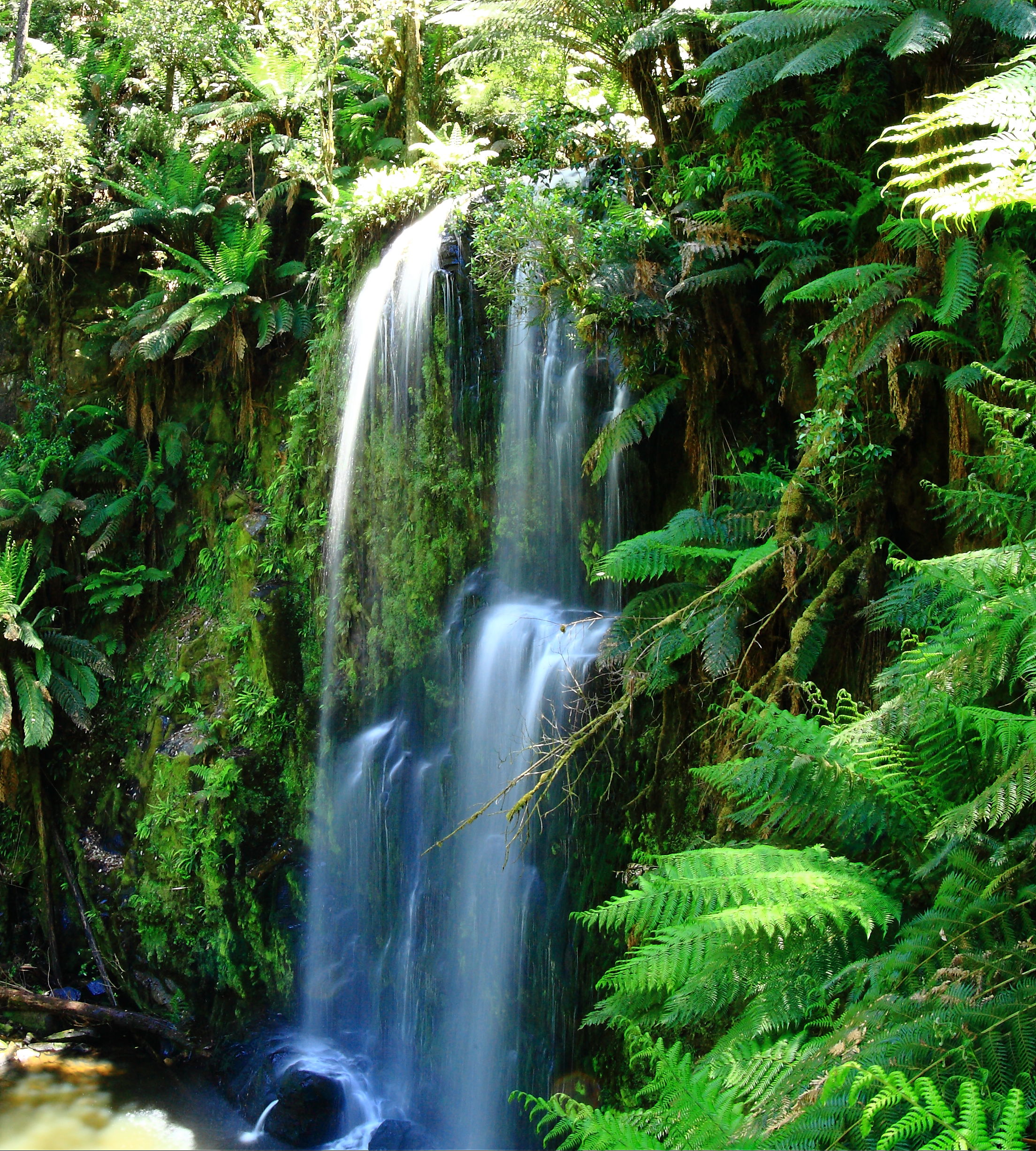
Beauchamp Falls
Within minutes our enthusiasm was raised as we started finding evidence of Victaphanta compacta. We laid a bounty down of 2 sweets for the first person to find a live one, and just as we arrived at the falls the cry went up – Amanda found it and with Oscar’s help he emerged with the famous Otway Black Snail in his hands, a species of carnivorous land snail that eats meat. Maybe not such a fearsome beast but a very unusual critter nonetheless. Mission accomplished!
Narawntapu National Park
Narawntapu National Park hadn’t been on our radar but when Hannah rejected our camp in the middle of the river at garden island near Clarence, after we had set up camp I may add, but we stumbled upon it as we headed towards Devonport, with only a few days left before we leave Tasmania.

Dubbed the Serengeti of Tasmania it comes as no surprise to see vast expanses of short grassland, but instead of wilderbeest, lions, and elephants, this national park is full of marsupials. Forresters Kangaroos, Bennetts Wallabies, Pademelons, Bettongs and Potoroos all can be found here. I still can’t work out which is which but the ranger told us the rule of thumb was whether they are knee or waist high, and bigger or smaller than this, but there are so many joeys around too they are starting to all look the same. The wetlands are a haven for bird lovers and one of Tasmania’s top 60 short walks is the Springlawn walk to the bird hide in the middle of the lake. Our camp was surrounded by wombat holes, but no sign of them yet!
The boardwalk takes you past swamps, melaleuca and silver banksia forest, then on to the lakehide. Black swans and coot were everywhere but also to be spotted were Australasian grebe, maned duck, pacific black duck, egrets, herons, blue billed duck, musk duck, hoary-headed grebe and many others.
Just beyond the hide the path takes you on a bush walk to the top of Archers Knob, where commanding views over the park can be enjoyed, including the full length of Bakers Beach. This beach has millions of soldier crabs parading the shoreline at low tide and the kids had a competition to see who could find the most shark and ray eggs. They found at least 4 different species.
I also spotted my first snake here – a tiger snake basking in the sun on the walking path.
The poor wombats are suffering from Wombat mange caused by mites and seeing a wombat with very little fur staggering around during the day, covered in flies was not a pretty sight.
Categories: 4WD, Adventure, Animal Action, Australian Outback, Beach, Big Lap, Discover Australia, Explore Australia, Journey Narrative, Kids Travel, Location, National Park, Natural World, Photography, TAS, Tasmania, Travel, Travel Adventure, Twitcher, Walks
Tags: Archers Knob, bennetts wallaby, Bettong, blue billed duck, Forrester kangaroo, Grebe, hoary-headed grebe, Maned duck, musk duck, Narawntapu National Park, pacific black duck, Pademelon, Springlawm walk
6 Comments
Eddystone Point and Deep Creek
On the far eastern point of Tasmania, above the Bay of Fires, within Mt. William national park is Eddystone Point. Our new home was the Deep Creek campsite several kilometres away, where a handful of fishing shacks line the shoreline. A short walk from the campsite up the shallow creek takes you to a large deep pool that would be great in summer but given the weather we have been experiencing no-one was up for the challenge to jump in.
A quick visit to the lighthouse built at the end of the 19th century was followed by a visit to nearby Larc beach. Recent storms had laid bountiful piles of seaweed on the beach, but on closer inspection one pile turned out to be a particularly gruesome seal carcass. The kids loved this, though were a little disappointed that it wasn’t a Thylacine (extinct Tasmanian Tiger). It was so badly decomposed all we saw at first were the big canine teeth and fur. With storm clouds approaching we had a quick look at the Bay of Fires beach, recommended as being one of the whitest sands to be found, before returning to camp. When we returned the following morning Xavier found a Hooded Plover nest with two eggs in it.
Categories: 4WD, Adventure, Animal Action, Australian Outback, Beach, Big Lap, Camper Trailer, Discover Australia, Explore Australia, Journey Narrative, Kids Travel, Location, National Park, Natural World, Offroad, Photography, TAS, Tasmania, Travel, Travel Adventure, Twitcher, Walks
Tags: Bay of Fires Beach, Deep Creek, Eddystone Point, Hooded Plover, Larc Beach, Mt. William National Park
Leave a comment

 Fifty Toes Walkabout
Recent Comments