australia

Next stop Kurumba (Via Burketown and Normanton)

Having covered quite a few kilometres recently and being behind in my blog due to having no telephone coverage for days on end I had to dig out the map to recall this one!

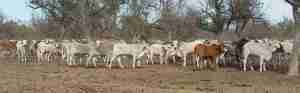
Preferring the road less travelled we chose to head north from Boudjamulla National Park towards the Savannah Way and this plan proved way more challenging than it should have been. We got into the habit of opening and closing gates behind us as the road continued but when I looked up after one gate, having driven a hundred metres into the centre of a monstrous herd of cattle, it became obvious the only tracks were those of the cattle. What made it somewhat amusing was the fact that we were still being followed by a very trusting couple of backpackers who had asked us directions, and obviously accepted our confidence. At that moment a stockman drove past on the opposite side of the fence with a freshly killed cow strapped to the back of his UTE. I casually pushed past the cows towards him trying not to look like a goose, but he must have been killing himself with laughter and after a brief polite exchange of pleasantries he put us back on the right track closing with “If you keep going this way you can drive for a week without seeing anything”. Sure he was exaggerating but point made both cars exited the paddock quickly.

With no further significant events the next stop was Bourketown after a very dreary stretch of the Savannah Way. The land is so dry and overgrazed it is quite sad to see herds of cattle, ribs clearly visible, sitting under what little shrub, or tree, cover there remains offering shade, in what can only be described as a dustbowl landscape.

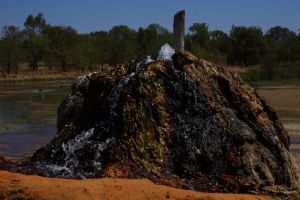
Bourketown has an artesian bore that leaves the ground at a scalding 68 degrees. Drilled as early as 1897, it was found to be suitable only for adult cattle to drink, and the CSIRO in 1959 decreed that it was unsuitable for domestic use, irrigation, the flow was uncontrolled and was leaking. The was a bath house here for a while but nowadays there is just a swampy ground frequented by wallabies and wading birds. The mineral content of the water is so rich that their deposits over the last hundred years have caused the bore to “grow” upwards into an impressive rock structure.

The Savannah Way onwards to Normanton yielded few more surprises or points of interest, however, the big crocodile was awaiting us in Normanton and the kids were getting excited. We chose to stop and camp at the Leichhardt River as we had covered quite some distance already and though the Leichhardt Falls were dry the camp spot was pleasant.

We had a quick fish and caught a shark, interesting as the river level was so low, not tidal here, and we were over 50km upstream from the Gulf of Carpentaria. An arafura file snake poked his nose out of the water, flicked his tongue to check us out then slipped back into the depths. A solid campfire on a crystal clear starry night was the perfect end to the day and I tried to take some long exposure shots. Does anyone know why I am getting different coloured light specks all over the images (no they aren’t the stars)?

A short 2km deviation off the final stretch of the Savannah Way to Normanton takes you to the spot where early explorers Bourke and Wills made camp 119. All but one of the party perished shortly after from starvation and/or malnutrition. The only survivor relied on aboriginal assistance and the tragedy of the story is that the aborigines consider this a fairly abundant region.

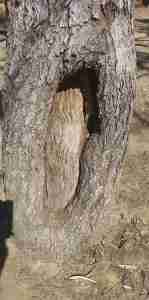
In 1861, a dash to the north coast was made from this, their most northerly camp, to the Gulf of Carpentaria. The people remaining at the camp passed their time creating blazes on surrounding tree trunks, and though many have died there are a few remnants remaining, the clearest probably being the Walker tree that was carved the following year after their expedition. Others are marked by a plain steel square nailed to the trunk, identified from early photographs and the distinctive blazes.

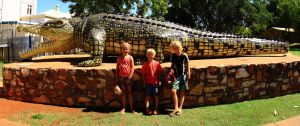
Krys the Savannah King was an 8.63m estuarine crocodile that was shot near Normanton in 1957. A supposedly replica statue is proudly displayed in the town centre, and whilst the length may be accurate it definitely seems that actual proportions may have been slightly exaggerated to create the beast that we went to marvel at. For those doubters, compare the photo of the hunter sitting on the corpse from 1957. Don’t get me wrong, 8+m long is huge, but that Normanton statue looks closer to a four-legged T-rex proportion. We had some fun there then pressed on to the Barramundi capital, Karumba. We have yet to bag a barramundi that we could eat!

Categories: Adventure, australia, Australian Outback, Big Lap, Discover Australia, Explore Australia, Journey Narrative, Kids Travel, Queensland, Road trip, Travel, Travel Adventure | Tags: , , , , | 2 Comments

Boudjamulla National Park (Lawn Hill)

Riversleigh is a world heritage site based on the abundance of unique fossil deposits found there. To get there we had a relatively short drive from our camp at the O’Shaughnessy River, two short, shallow, but surprisingly slippery river crossings, and the obligatory corrugated rocky dirt road that makes the outback what it is. Whilst it appears to be an unremarkable spot on the surface, the signs provided allow visitors to look past the dusty, dry rocky landscape. For even the more imaginative visitor visualisation of the change in landscape over millions of years is challenging as the fossil record represents eras of marine reef, through to swamps when giant 4m freshwater crocodiles were the apex predators, and then elephant birds whose enormous size meant they couldn’t fly.

One fossil in the rock exposed a cross section of a turtle shell thought to be long extinct, however, as recently as 1995 the gulf snapping turtle was rediscovered in the Lawn Hill river system, thriving as it has done for thousands if not millions of years without change.

A short drive from this hot arid, fly-ridden place brought us to the oasis that is Boudjamulla National Park. The deep gorge and pandanus-lined river is a verdant oasis for fish and birdlife. Water levels were low and the Cascades had no water flowing over them, however the Indarri Falls, less than a kilometre upstream, spilled beautiful green, warm, lime-saturated water into the gorge. The water turbulence at the falls causes a gaseous release of carbon dioxide and the “tufa”, as it is called, is deposited at a surprising rapid rate, 2-3cm annually. The falls are not large, less than 3m in height, and covered in pandanus growth. Below the falls barramundi and turtles abound and we all spent hours exploring every nook and cranny.

The park also offers a number of bushwalks. The Wild Dog Dreaming track leads you along the river bank to a cliff face covered in ancient petroglyph art and more recent Waanyi rainbow serpent artwork. Island Stacks offered a walk on the limestone escarpment above the gorge, but the longest walk up the gorge was closed due to the threat of a grumpy buffalo that had recently been spotted up there.

All the forests were busy with birds and we spotted a pair of large channel-billed cuckoos near the trailer, and a whistling kite’s continual call gave away it’s nest site above the river, high in the outreaching limbs of a Eucalypt tree.

Canoes could be hired to explore but there was no need, and one day we made the decision to swim the one plus kilometre back to camp through the gorge, while Amanda carried our clothes back. The kids jumped on their inner tubes (presents from our friends at Marree Hotel so long ago now) and conquered the journey in no time at all.


Categories: Adventure, australia, Australian Outback, Big Lap, Camper Trailer, Discover Australia, Explore Australia, Journey Narrative, Kids Travel, National Park, Natural World, Photography, Photos, QLD, Road trip, Travel, Travel Adventure, Walks, Wildlife | Tags: , , , | 4 Comments

The Plenty Highway

This slideshow requires JavaScript.

Alice Springs didn’t have the tyre we needed to replace our worn flat tyre so with no further reason to hang around we headed north up the Stuart Highway again to the junction with the Plenty Highway. This road is almost 500km long, predominantly unsealed, that provided us a relatively direct route into Queensland. Both the car and I are a little weary of corrugated dirt roads so this route offered a compromise. The road is also known for the mineral rich environment it passes through, and a random decision en route saw us pull in to the interesting named Gemtree caravan park.

The kids excitement levels rose when they saw there were tag-along gemstone tours for garnets and zircon so we duly booked up for the next day. The offer of a camp roast dinner that night proved too much too so that too was promptly booked. Then as we settled in to the site, each named after a gemstone, a cry went up that “110AroundOz” were in the camp, another Sydney family that we hadn’t seen for a while.

KatesCampKitchen

Kate and Arran, who run the park, won an award for their camp oven dinners in 2014. That evening Kate introduced her team and gave a thorough overview of the development and operation of the camp oven. The dinner was a well-oiled production line operation and the full-stacked plates that swiftly emptied were testament to the quality of the dinner. We have only had one roast dinner since we have been away so it was a real treat, particularly the beer keg-cooked spuds.

This slideshow requires JavaScript.

Early next morning the car was loaded with pick, shovel, sieves, bucket and a 20 gallon drum of water, and a small convoy followed our guide Greg along the dusty road, pulled off some kilometres later and arrived at an unremarkable spot. Greg demonstrated how to sieve the dug soil, and how to wash it and by looking through the base at the sun garnets can be identified by the blood red glow in the light. The fragments often looked like bits of broken glass, but we hit a good patch, and after a few hours we were the last to leave with a tin full of garnet fragments. Back at the park Kate examined and graded them, commenting that she had never seen so many cutting grade garnets found before. With our beady-eyed fossicking kids it wasn’t really a surprise.

Mulga ant hole

Mulga ant hole

The property also hosts zircon fossicking trips, but I chose to take the self-guided nature trail that highlights many of the native shrubs and trees and their medicinal or other uses. The mulga ant holes lined the walkway, supposedly a sign of impending rain, but little evidence of this being the case on any forecast I have seen. Although I didn’t see as many birds as were found in the camping area itself I was amused to find a few tees for what must once have been a golfing grand plan. From their condition I guessed that maintenance of a big course is actually quite hard and I couldn’t find any evidence of flags where the holes might have been.

Gemtree was truly a hidden gem that we were lucky enough to stumble upon. A few days earlier we never even planned to be in this neck of the woods.

From Gemtree the Plenty Highway provided lots of dust heading east, but the road itself wasn’t too bad. A particularly large termite mound by the side of the road provided a welcome opportunity to stop and let the kids try to scale it. Apparently the insides of the mound can be rubbed on the skin as a mosquito repellent, but you have to break into the concrete-like structures first.

Categories: 4WD, Adventure, australia, Australian Outback, Big Lap, Discover Australia, Explore Australia, Journey Narrative, Kids Travel, Northern Territory, NT, Offroad, Photography, Road trip, Travel, Travel Adventure | Tags: , | 3 Comments

Urandangie and beyond Mount Isa

This slideshow requires JavaScript.

Just before the Plenty Highway ends and becomes the Donohue Highway past the Queensland border, we turned left, at Tobermory. For the next 70km or so of unsealed dirt there were regular signs promoting the Urandangi pub. Not that we needed to be tempted but the only pub between Alice Springs and Mt Isa was an offer too good to refuse. Still the humorous signs kept coming at regular intervals with things like “Hot Dusty Road, Ice Cold Beer”, and “Skippy’s Retirement Home”, many on recycled car bonnets. As we approached the town of Urandangie, the car bonnets announced the river crossings and features of the area, “Sally’s Crossing”. “Wallace Rockhole”, “Bill’s Crossing”, “Dinner Camp”, and many more.

At the end of the hot day we pulled up at the pub. To my delight there was a tap of Guinness, but this was just another cruel joke because in a town where the population is 7 adults the demand is obviously not sufficient to justify keg beer. As we quaffed our drinks the publican brought out two loaves of bread for the kids to feed the horses. When they returned she led us all out through the pub, through her lounge and into the backyard where a mob of baby joeys pottered around. One particularly friendly one, Chat, who loved a scratch and a cuddle came up to the kids and grabbed them in a tight hold, awaiting a scratch under the neck. He became quite interested in my beard, grabbing it in both paws before landing a kiss on my lips before I could escape.

The town was established in 1885 and became a popular stop for drovers on the Georgina Stock route between Camooweal and Dajarra. Even Chinese migrants en route for goldfields stayed and worked here. The publican, Pam, provided us with an interesting summary of the history which provides a good read around the campfire.

This slideshow requires JavaScript.

We were then directed back down to the campsites near the river and established ourselves at Wallace Rockhole, where the pools of water looked promising to catch dinner. Unfortunately the only yabby we caught was returned unharmed as it would have only provided a snack for one!

The kids did find an inland python sitting on the rocks below the camp. Another beautiful starry night around the campfire was followed by a morning threatening rain. Dark clouds gathered from the West and a rainbow appeared nearby, but as we headed north towards Mt Isa we left it behind. A cattle muster crossing the road provided a temporary diversion from the unsealed monotony of driving.

Muster on the road

Muster on the road

Mustering in progress

Mustering in progress

We were greeted by a huge power plant at Mt Isa, and knowing the Queensland National Parks have online bookings we thought it prudent to book a place at Boodjamulla National Park (Lawn Hill). After a lengthy process, more painful than pulling a tooth we found there was only one site we could book for three consecutive nights. Simon booked three different tent sites and we agreed to sort it out on arrival. Funnily enough we never seem to stop long in the big towns to explore and as soon as we have refuelled, restocked supplies we tend to head out as quickly as we can.

With the park 390km away we found a beautiful free camp by the O’Shaughnessy river on the way, arrived late in the afternoon for a quick refreshing dip, another campfire and marshmallows for the kids and the melodic bubbling of the river the next to the camp very quickly helped everyone fall asleep very quickly after another long day’s driving.

O'Shaughnessy river cascades and crossing

O’Shaughnessy river cascades and crossing

Categories: Adventure, Animal Action, australia, Australian Outback, Big Lap, Discover Australia, Explore Australia, Journey Narrative, Kids Travel, Photography, Queensland, Road trip, Travel, Travel Adventure | Tags: , , | 1 Comment

Henbury Meteorite Conservation Reserve

On our return to Alice Springs from Uluru, with plans totally changed we decided to have a look at the Henbury Meteorite crater site. The area is pretty desolate, dry, dusty, very rocky and only small shrubs interspersed throughout the barren landscape. The campsite was fine, right next to the meteorite crater site so a quick exploration was required before sunset.

Having seen the gigantic meteorite at Wolfe Creek earlier in our trip I wasn’t expecting much of this place, however it did have a few surprises in store for us. Firstly I was surprised to read that NASA astronauts have visited the site to get a feel for the lunar landscape. It sounded more like a junket to me. The meteor itself smashed into the atmosphere approximately 4,000 years ago, but unlike Wolfe Creek this one split into several pieces, the largest being the size of a 200l oil drum. Four of these pieces hit the ground next to one another while the other eight or so remnants hit the earth some distance to the south (not immediately visible from where we stood).

Two of the craters had overlapped into a single large crater, almost 200m across, and the remnants of the walls between them was only visible from spurs jutting into the crater on opposite sides, the fused rock having been more resistant to erosion.

Walking through the middle the kids pointed out a “dead finish” bush, so hardy that if it dies then everything else will be dead or finished too. The two adjacent craters were smaller, one quite dry and devoid of plant life, the other quite the opposite. The last crater apparently retains water well offering an oasis for a small stand of trees that occupy the circumference of the base. The base, now dry, was covered in a thick mat of grasses, and a patio of cracked dried mud. When full it must offer a refuge for many birds and animals.

With little else to do here it was a good opportunity for Amanda to cook some muffins on the Weber and the kids to catch up on their homework, while I attended to some much needed maintenance on the trailer.

The sun set and we sat back to enjoy the spectacularly clear night sky show, with satellites passing far above us in all directions, the band of the milky way stretching across the sky, and a million stars twinkling brightly at us from across the universe.


Categories: Adventure, australia, Australian Outback, Big Lap, Discover Australia, Explore Australia, Journey Narrative, Kids Travel, National Park, Northern Territory, Offroad, Travel, Travel Adventure | Tags: , | Leave a comment

Uluru-Kata Tjuta National Park (Ayers Rock & The Olgas)

Speeding towards Uluru National Park the next morning we past the “Grismacks” heading in the opposite direction, the last time we will see them on this trip as we head in different directions.

Uluru, also know as Ayers Rock, is a massive monolith (single rock) made of sandstone, that erupts from the flat surrounding landscape, famous for its changing colours as the sun sets in the evenings. It is over 400km from Alice Springs and many people, including a couple in our car, mistake their first glimpse of Mt Connor for Uluru. They are actually very different, Mt Connor having a flat top and precipitous walls surrounding it, whilst Uluru is much more rounded in appearance.

We had decided to try and climb Uluru and given that it had been windy and closed for climbing in recent days, had crossed all fingers and toes, hoping for a calm day. With the wind definitely increasing as we arrived we filled up our water and headed through the gate. The first section is the steepest as you follow the chains up the side of the monolith. Within 100m Xavier made a sensible decision, given his fear of heights, and decided not to proceed. Shortly after, Hannah muttered something and turned around too. Down to three of us left, Amanda, Oscar (with his visiting school toy, Wilma wombat) and myself we trudged up the calf-punishing rock. We even passed one clown walking in thongs, who lost one over the edge when he finally turned around.

Oscar was in fine form and paced onward and upward. Amanda fell back. At the top of the chain an interrupted white line guides you across the undulating top of the rock and after a few short climbs Oscar and I celebrated at the peak with a high five, then photo opportunities with Wilma. We waited for Amanda, waited some more, then with an increasing wind threatening to make the descent interesting we decided to return.

Whilst it might be somewhat controversial to climb the rock, the ceremonial sacred sites are actually around the base of the rock, and the local Anangu people’s main concern is that people don’t harm themselves on the rock (over 35 people have died trying to climb it). Having enjoyed walking the 10km walk around the base previously I justified the climb based on the fact I was not disrespecting ceremonial sacred sites.

Watching the sunset on the rock with the kids proved a little disappointing as cloud cover restricted sunlight hitting the rock.

Next day I was struck with illness so the others headed off to Kaja Tjuta (The Olgas), and the highlight of their trip proved to be the camel farm that they dropped into for a photograph session with Wilma the Wombat. After generously facilitating the photos the girl at the farm let them prepare saddles for the sunset ride, and even gave them all a quick free ride around the yard on the camels. Two hours were spent at the camel farm and only 30 minutes at the Olgas!

That evening our plans changed dramatically and instead of heading south towards Coober Pedy again we chose to back-track north, to take the Plenty Highway to enter Queensland rather than the more arduous plan across a number of desert tracks to Dalhousie, Birdsville, all of which will have to wait for next time.

Categories: Adventure, australia, Australian Outback, Big Lap, Discover Australia, Explore Australia, Journey Narrative, Kids Travel, National Park, Natural World, Northern Territory, Photos, Road trip, Travel, Travel Adventure, Walks | Tags: , , , | 2 Comments

Watarrka National Park (Kings Canyon)

Clutching our permits that allowed us access to the Mereenie Loop we left Palm Valley early choosing to take the shorter route to Watarrka National Park. Travel early in the day is recommended to avoid afternoon sun in your eyes heading west. The unsealed road was rough, but fine to drive and nothing like a few of the 4WD tracks in the area. It passed through typical central Australian landscape of grassy savannah, sparsely populated with the Casuarina or sheoak trees, and the red dusty dirt that prevails everywhere.

It was a hot day and we decided to walk the 5km loop around Kings Canyon, rather than the short trip up the valley. The start was a punishing steep climb up a rock staircase, in searing heat, but once conquered the rest of the walk was pretty comfortable and relatively flat. At various points the unrestrained lookouts give you an eagle’s eye view of the canyon, sheer, flat, often overhung cliff faces disappearing into the treetops below. As soon they put up barricades for people’s safety (or protection from their stupidity) the raw beauty will be lost, but until then it remains a truly unspoilt natural wonder. Unfortunately though, Xavier doesn’t have a head for heights so he is noticeably absent from the photos as we couldn’t coax him to join us.

Around the halfway mark the track allows you to enter the “Garden of Eden”, an oasis below the cliffs that has abundant cycad growth and at the base an icy cold pool provides refreshing relief to the overheating walker. Four of us took what must be one of the shortest “dips” we have had and as the cold took hold it was hilarious to see everyone’s faces change to horror, then the mad scramble to scale the slippery rock-face back into the warm sunlight.

Beyond this there is a section of the walk that resembles the Bungle Bungles, a vista of layered beehive-shaped rocks covering the top of that part of the canyon.

With insufficient energy left to attempt another walk in the 33 degree heat we found an early camp secreted away in the bush, made a campfire and settled in to enjoy an undisturbed evening below a magnificent escarpment near Kings Creek. It was in the fading sunlight that Amanda noticed we had a flat tyre and I was obliged to perform a hasty change lying in the rocks and dirt before the light disappeared.


Categories: Adventure, australia, Australian Outback, Big Lap, Discover Australia, Explore Australia, Journey Narrative, Kids Travel, National Park, Natural World, Northern Territory, NT, Offroad, Photography, Photos, Travel, Travel Adventure | Tags: , , | 2 Comments

West from Alice Springs

Our first night in Alice saw temperatures plummet to 3 degrees. What few warm clothes we had came out but it was actually quite nice as by 9am the temperature had risen enough to be comfortable again. With all warm clothes stowed again we headed out of town along the West MacDonnell Ranges.

Knowing it was a short drive for the day we made some impromptu unplanned stops as we went. First up was Simpsons Gap in the Tjoritja / West. MacDonnell National Park. Following the dry river bed towards the gap I was surprised to see “No Swimming” signs but at the gap there was a substantial lake full of icy cold water. A few black-footed wallabies hopped around the rock piles on both sides of the gap, looking down intently watching our every move. We also spotted plenty of striated grass wren jumping around the rocks and grass.

A little further along the road we stopped to have a look at the local indigenous artist, Kathleen Buzzacott’s studio. Everyone loved the deep bowls filled with coloured seeds, and running hands through them just felt so good! The kids were interested in the jewellery made from the seeds and then watched intently as Kathleen showed them how to dot-paint. A very interesting stop that inspired the kids drawing efforts that afternoon in the car.

Hermannsberg was established as a Lutherian Mission in 1877 by two newly arrived missionaries from Germany. Their trip alone to the area was a marathon of hardships and drought, having being despatched in mid-summer. Today the mission offers an insight to outback life in the late 19th century. The kids marvelled at the size of the porridge pot, particularly as we all ate hot porridge for breakfast. We also learnt that in the indigenous language, Arrernte, there are only four number words, for 1,2,3 then everything beyond this is “a mob”. The kids struggled  trying to grasp the concept, but an apple strudel was beckoning us in the café so we moved out of the school.

Just on the other side of Hermannsberg a dirt and sandy road led us up to Palm Valley. Having grabbed a campsite we decided to visit the valley before sunset and set off up a very rocky 4WD track to the start of the walk. It was slow and bumpy and the sun was falling fast but we all managed to make the 5km loop walk , then negotiate the track back down before nightfall. The deep-rich red colours of the valley rock walls were amazing to see as the sun dropped further in the sky, and to see Cabbage Tree palms nestled in the valley was interesting as the 2,000 odd palms are an isolated population, their nearest relatives being over 800km away in Queensland.

Categories: 4WD, australia, Australian Outback, Big Lap, Camper Trailer, Discover Australia, Explore Australia, Journey Narrative, Kids Travel, National Park, Natural World, Northern Territory, Offroad, Photos, Road trip, Travel, Travel Adventure, Walks | Tags: , , , , | Leave a comment

(Flash)Back to Kakadu (Gunlom Falls)

Everyone had been raving about Gunlom Falls and the beautiful natural “infinity pool” views so we decided to overnight on our return from Cobourg Peninsula to check them out. After a marathon day’s driving the dirt again we pulled in before sunset, set up camp and when I realised it was a short but steep climb I set off for a sunset shot. A handful of people were eating snacks at the lookout whilst another handful swam in the fading light but as I looked down the cascading pools I think I was suffering an overdose of falls and pools. It was nice but the water was only just trickling over the falls. The pools were filled with uninviting green algae. Sure the water was clear, an I even went for a quick dip, but I couldn’t help feeling that the Gibb River Road had offered so much more. If this was the first falls I had visited I’m sure I would have been impressed.

My glib “overrated” comment to the family was dismissed until the next day when we all returned for a peaceful early morning swim, whereupon I was surprised to get consensual agreement. I noted to myself that this one needed to be revisited in the wet season to give it a fair chance.

Before we left I saw a kapok tree adorned with yellow flowers and green pod-like fruit. This is a calendar that the aborigines use to tell them when the turtles are laying eggs, or eggs are hatching, depending upon whether the tree is flowering or fruiting. The seed pods are also used for dying pandanus for weaving, producing a rich yellow dye when boiled.

Driving out on the dirt road that morning a wrecked car by the side of the road reminded us of the perils of the unsealed roads, or maybe it was just a victim of one of the feral donkeys that we saw jauntily trotting along the road.

Categories: Adventure, australia, Australian Outback, Big Lap, Discover Australia, Explore Australia, Journey Narrative, Kids Travel, National Park, Northern Territory, Photos, Travel, Travel Adventure | Tags: , , | Leave a comment

Henley on Todd (Alice Springs)

Amanda had her heart set on seeing Henley on Todd, a days regatta of fun and hilarity, but all for a good cause to raise money to end Trachoma in Australia, through the Fred Hollows Foundation. In its history the regatta has only been cancelled a few times when the river is actually flowing! The Todd river runs through the heart of Alice Springs but for most of the time the river runs approximately one metre below the sands surface. If you dig down with your hands you don’t have to go far before it gets damp.

The commentators occupied an aptly named paddleboat to one end called the Pistill Dawn, and appropriate signage along the embankment indicated No Fishing and Swimming was prohibited due to shark infested waters.

The kids spotted a slippery pole at one end of the arena and dashed up with friends to battle it out above the freezing water.

The boat races are therefore all across sand rather than water and a plethora of events takes place as the day unfolds. From one person Kayak races to 8 person “Maxi” events, each event progressed with barely time to catch a breath. The boat races were interspersed with sand shovelling contests, a bit gruelling in the hot midday sun, then a surf rescue event where “lifesavers” paddle a surf ski (trolley on rails) through the sand to rescue someone the other end, when two people back on shore wind them back to safety. There were sand ski events, a bit like a three-legged race but 4 people on two skis marching up a course around the marker and back. Of course the turn was the challenge and many a team bundled over at this point. Whilst most of the races involved carrying the shell of a boat in one form or another the Oxford Tubs event looked much harder as two men teams paddled their boats along rails in the sand. There was also the boogie board tow event, sprints, lolly scrambles for the kids, the tug of war, a crowd favourite the budgie smuggler race and the Tour de Todd, where participants race one another inside giant hamster wheels. Oscar tried the latter and drew a collective gasp from the audience when his all fours approach back-fired and he was catapulted into the air landing on his back. Fighting back tears he jumped in and completed the course.

The lolly scramble was better for the kids, with each of them collecting a hatful from the arena floor. Hannah even entered the sprints, but missed her age-group heat and ended up competing against kids much older and bigger than her.

Amongst all the goings on three teams of Pirates, Navy, and a band of Vikings clad in fur tunics and horned helmets maintained a healthy rivalry in events, sabotaging one another’s teams when the opportunity arose. The Vikings mingled with the crowd wreaking havoc there too.

The day culminated with the famous Boat Battle Spectacular, where 4WD boats belonging to the three teams entered the arena for a massive water and flour bomb battle. As the boats sped around the arena, firework bombs discharged debris into the crowd and filled the arena with thick, coloured smoke. The Vikings accidentally set their boat alight and had to spend a few minutes hosing it down.

A fun day, and all for a very worthy cause.

Categories: Adventure, australia, Australian Outback, Big Lap, Discover Australia, Explore Australia, Journey Narrative, Kids Travel, Northern Territory, Road trip, Travel, Travel Adventure | Tags: , , | Leave a comment

Blog at WordPress.com.